Rhine
Germany, Netherlands & Switzerland
The busiest river in Europe, the Rhine has a romantic reputation despite its heavy traffic. Source of legends and lore, the river is thought of as German, but in truth, it traverses six countries as it wends its way from the Swiss Alps to the frigid North Sea. The river is categorized into four distinct sections: the Alpine Rhine, from the Gotthard Massif to Schaffhausen, in Switzerland; the High Rhine, from Schaffhausen through Basel and on through the Binger Loch gorge; the Middle Rhine (also called the Romantic Rhine), from the gorge to Bonn, through the Uplands region of vineyards and castles; the lower Rhine, from Bonn through Westphalia and the Netherlands to end at the North Sea.
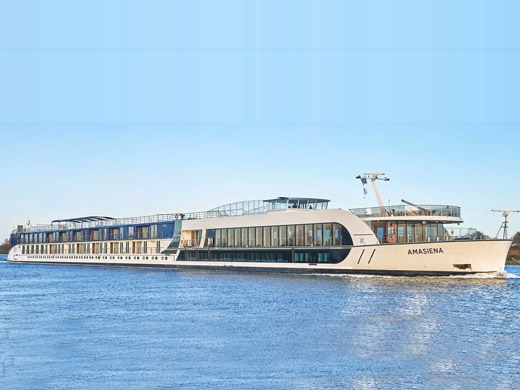
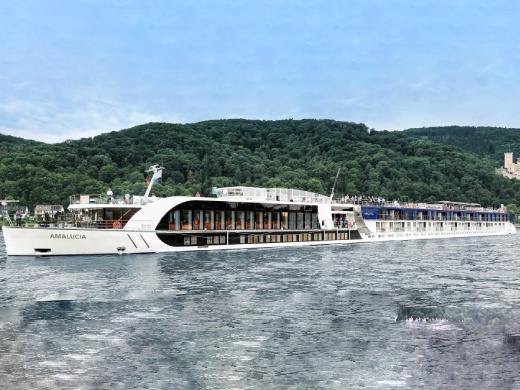
Most Rhine cruises focus on the Middle Rhine's "Romantic Rhine" stretch between Cologne or Koblenz and Basel, the section dense with castle-topped hills and vineyard villages that gave the river its reputation; itineraries that continue north into the Netherlands trade castles for canals and tulip fields instead. As Europe's busiest river cruise route, the Rhine offers the widest choice of ships and sailing dates of any river in this guide, along with seasonal specialties like spring tulip cruises and the Christmas Market sailings that run through December.
Ports of Call
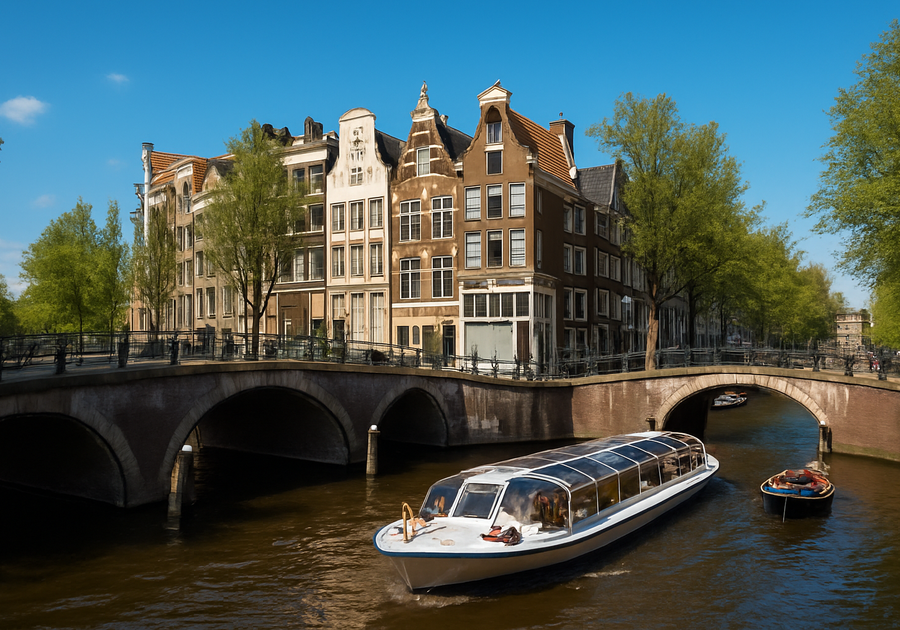
Amsterdam, Netherlands
Crisscrossed by canals and arched bridges, Amsterdam is a frequent starting or ending point for Rhine river cruises. The Rijksmuseum and Van Gogh Museum anchor its arts scene, while the Anne Frank House draws visitors into the city's wartime history. A canal cruise or a stroll through the Jordaan district's narrow streets is one of the best ways to get a feel for the city before or after your riverboat sailing.
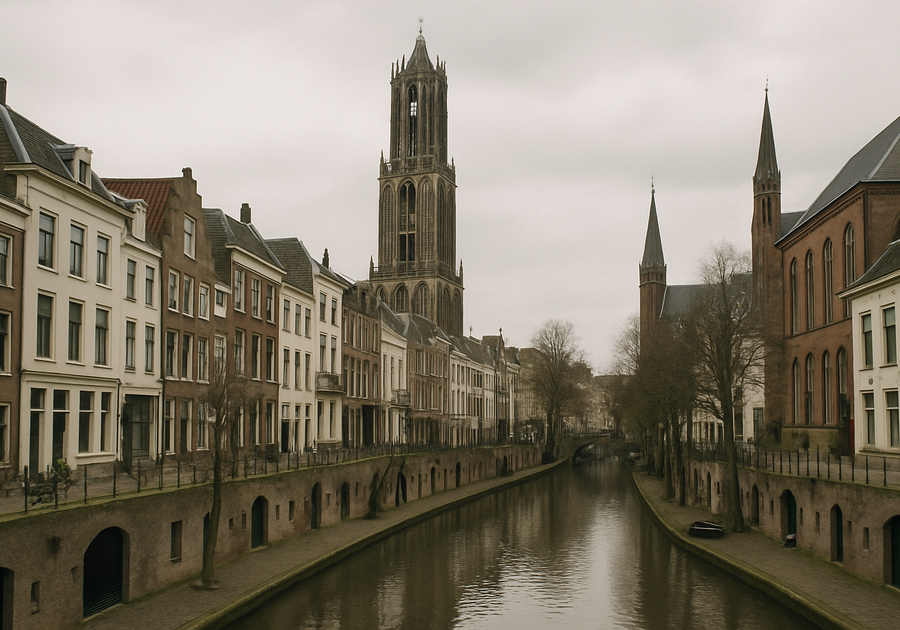
Utrecht, The Netherlands
In the center of the country, this large city is home to a collection of impressive churches, as well as a major university that dates to 1636.
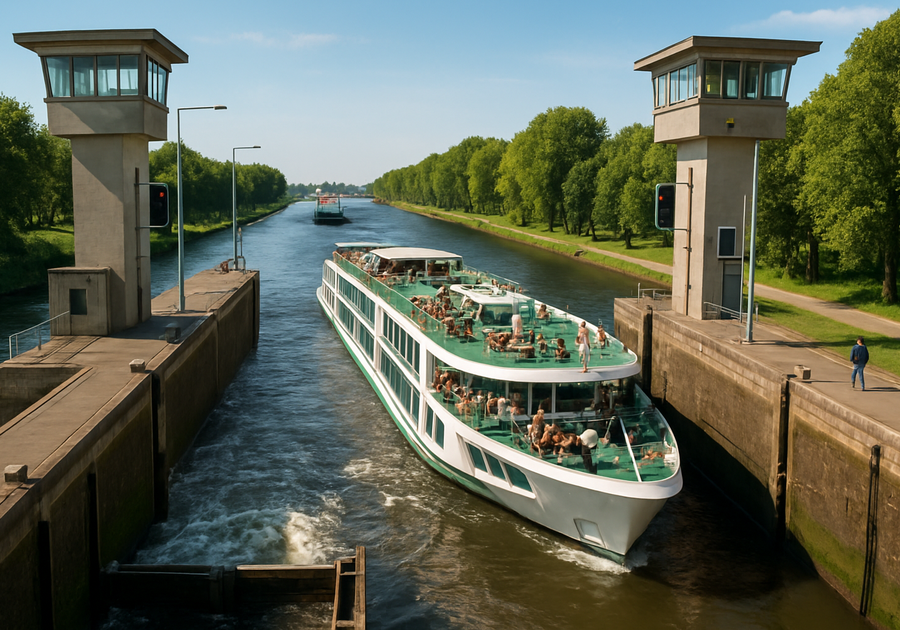
Amsterdam-Rhine Canal
This 48 mile long canal is considered to be the busiest in Europe. Linking Amsterdam and the Lek River, the canal has four locks and was opened in 1952.
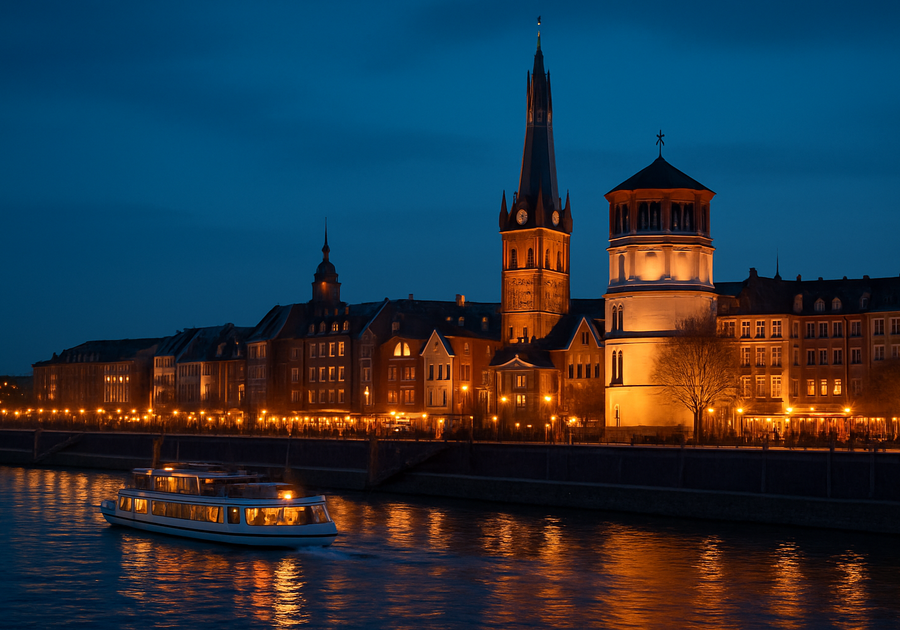
Dusseldorf, Germany
Famous for its beer and scores of pubs in its scenic Old Town, the capital of North Rhine-Westphalia is also a hub of both banking and iron and steel production. There are several good museums (fine arts and ceramics), the striking Lambertus Basilica, which dates to 1288, and the Castle Tower, all worth a look. If your timing is right, you can enjoy Dusseldorf's renowned Christkindl Markt, or Christmas Market.
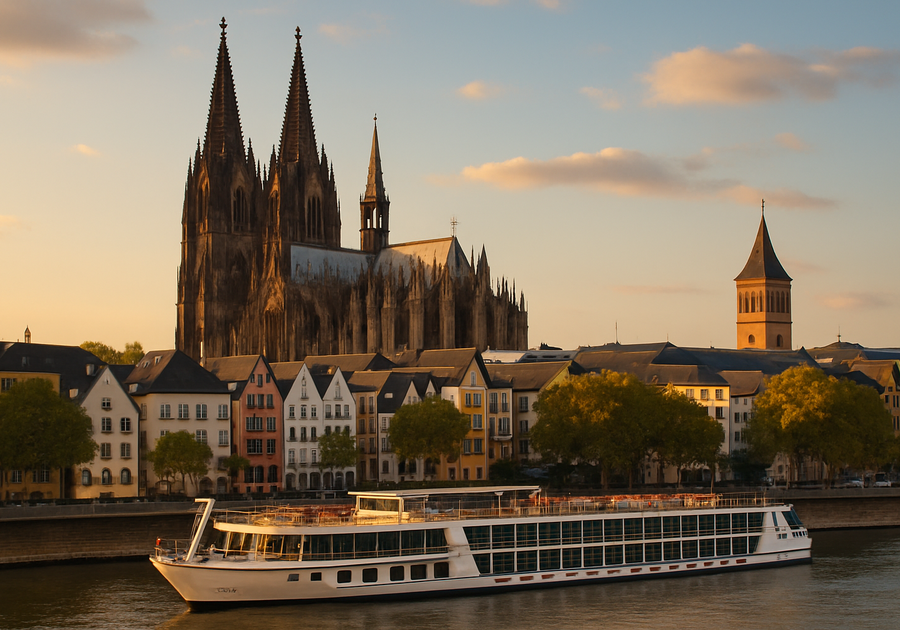
Cologne, Germany
A busy modern city and the economic hub of the Rhine, Cologne (or Köln) welcomes river cruisers in the very center of its old town area. Important in ancient times, as it is in modern, the city is a balance of old and new. Though heavily bombed during World War II, Cologne was rebuilt in its historical pattern and its beautiful, double-spired cathedral still has pride of place in the city center. The bustling squares around the cathedral are where you will find the city at its most active.
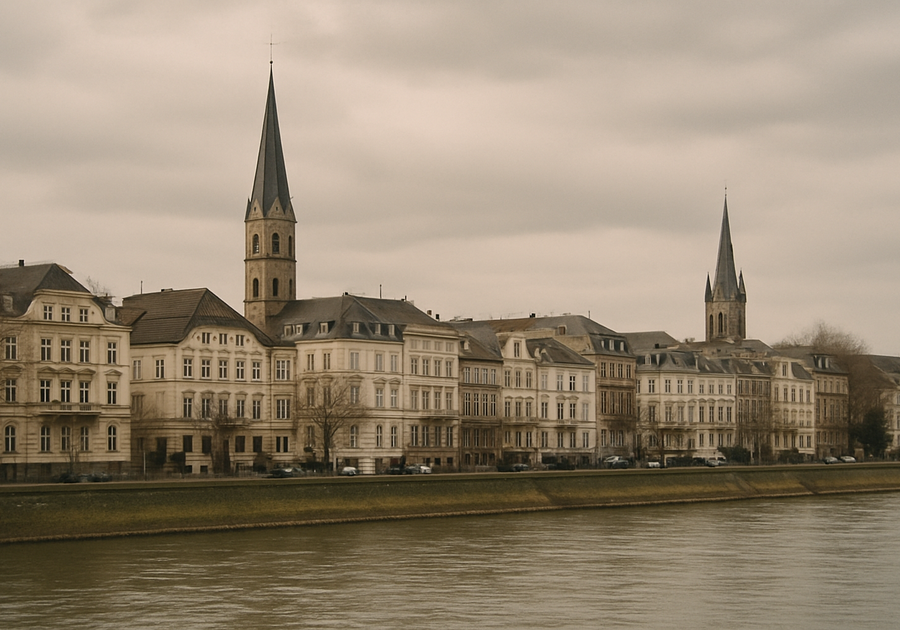
Bonn, Germany
Originally a stronghold of Roman defenses on the Rhine, Bonn was also once the West German capital, until replaced by Berlin after reunification in 1999. Development as a city began in earnest during the Middle Ages and Bonn attracted movers and shakers of German society starting in the 17th century. The birthplace of Ludwig van Beethoven, here you can visit the composer's home and birthplace, a museum since 1890.
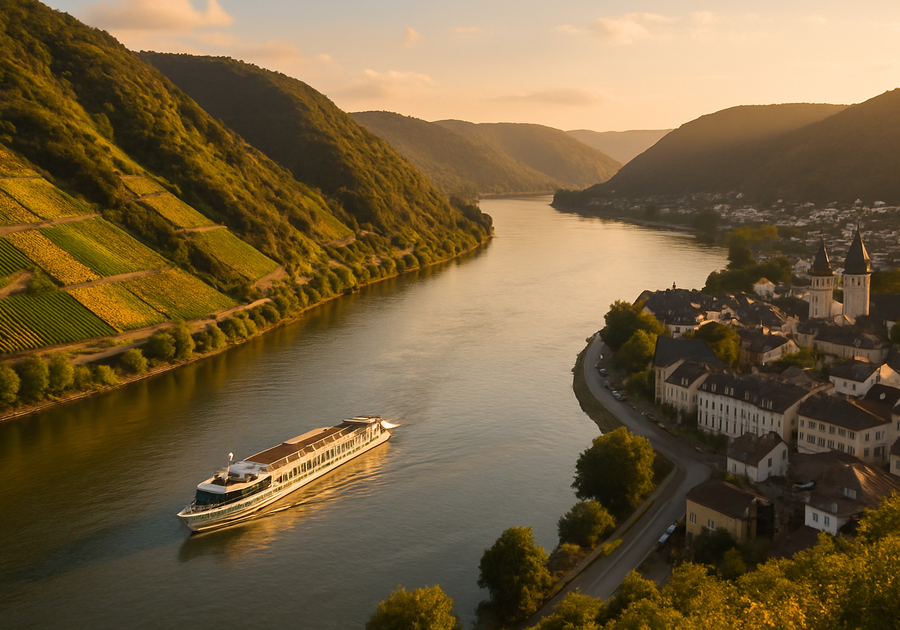
Boppard, Germany
Situated on a bend in the Rhine, this lovely city plays host to 14 wine producing cooperatives that produce more than 100,000 gallons each year, taking full advantage of some of Germany's steepest slopes. Here, you will also spot Roman and medieval remains and a number of convents.
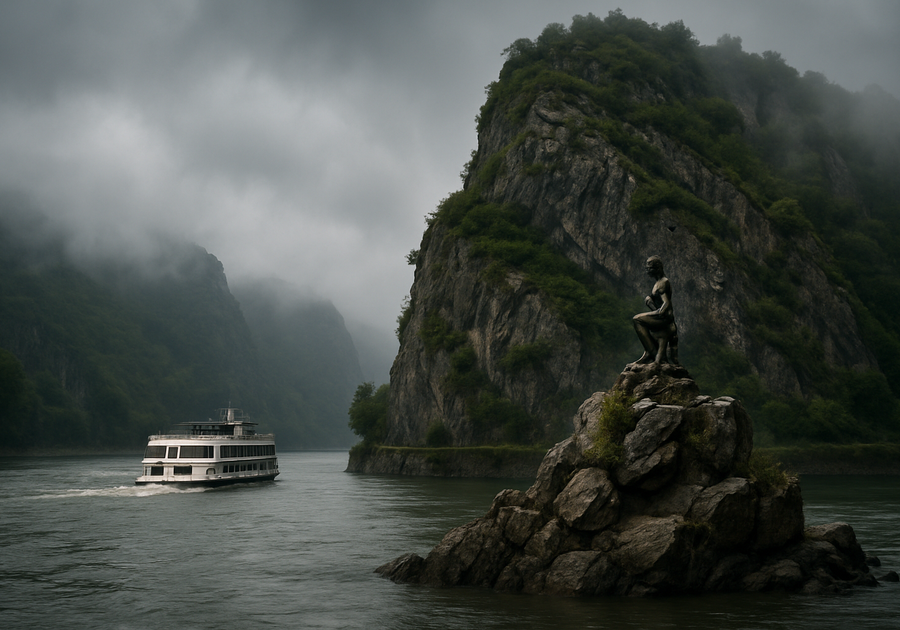
Lorelei, at St. Goarshousen, Germany
In this treacherous part of the Rhine, where a narrow gorge, jagged rocks, and strong whirlpools threaten ships, a bronze statue of the maiden Lorelei keeps watch. Immortalized in Heinrich Heine's poem, Die Lorelei, she was said to have appeared here, luring entranced sailors to their doom on the rocks, using her beauty and enchanting song.
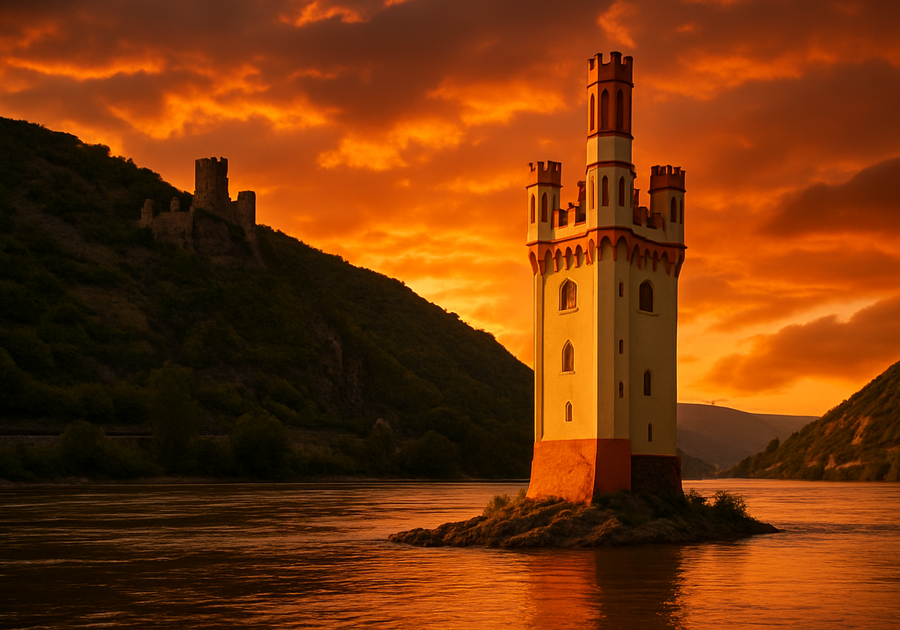
Mausesturm, Germany
Built in 1208 by the greedy, cruel Archbishop Hatto of Mainz, this slim red and yellow tower is the stuff of fairy tales. Used to collect customs levies from passing Rhine traffic, the tower, then called Mautturm (Customs Tower), stood opposite the customs castle, Ehrenfels. According to legend, Hatto hoarded grain during a famine and burned a barn full of starving peasants who came begging for food, comparing them to mice devouring his stores; in revenge, he was said to have been pursued by a horde of mice all the way to the tower, where they gnawed through its walls and devoured him, giving the tower its enduring name, the Mouse Tower.