Nile
Egypt
The Nile is one of the most storied rivers on earth, and its stretch between Luxor and Aswan remains one of the most popular river cruises in the world. Sailing past temples and tombs built over 3,000 years ago, cruisers get a close-up view of ancient Egypt that a bus tour alone can't match. Most itineraries pair a few nights on the river with a pre- or post-cruise stay in Cairo to see the Pyramids of Giza and the Egyptian Museum.
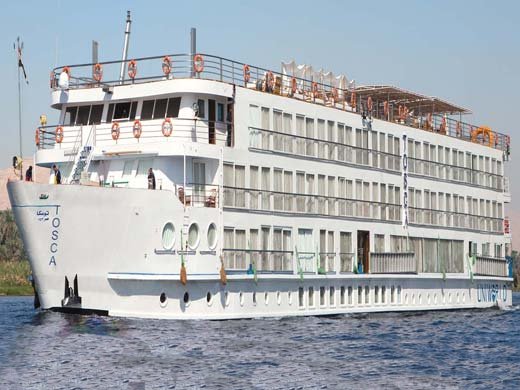
Nile cruises run aboard traditional, mid-size riverboats of roughly 60 to 200 cabins, sailing the same stretch between Luxor and Aswan in either direction over three to seven nights, with sightseeing built around temple visits timed for the early morning and late afternoon light. October through April, when daytime temperatures are milder, is the most popular sailing season; summer cruises run considerably cheaper but demand more tolerance for heat.
Ports of Call
Cairo, Egypt
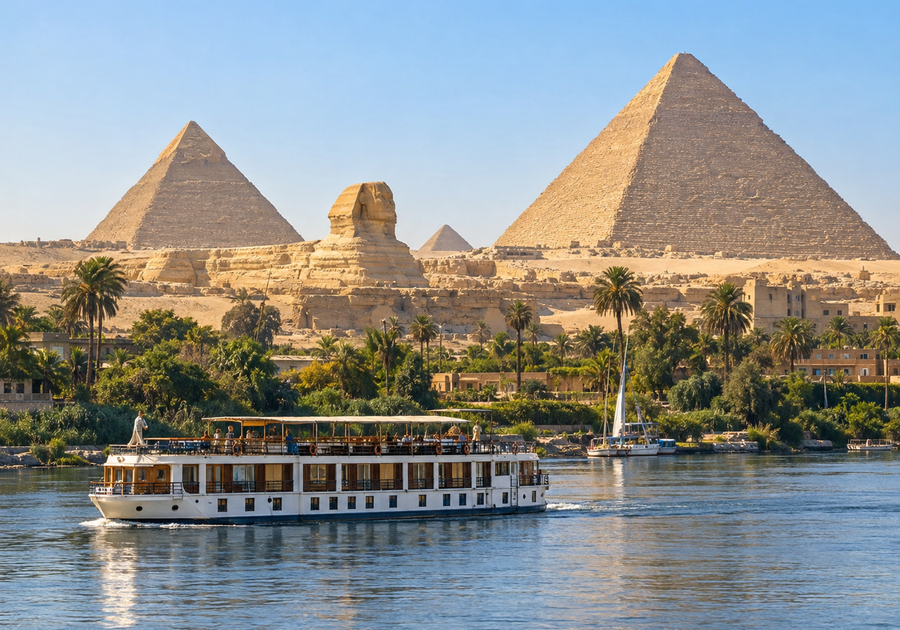
Most Nile cruises begin or end with a stay in Cairo, home to the Pyramids of Giza and the Great Sphinx, along with the treasures of the Egyptian Museum, including Tutankhamun's golden mask. Cairo's Islamic old town and its sprawling Khan el-Khalili bazaar round out a typical pre- or post-cruise stay.
Luxor, Egypt
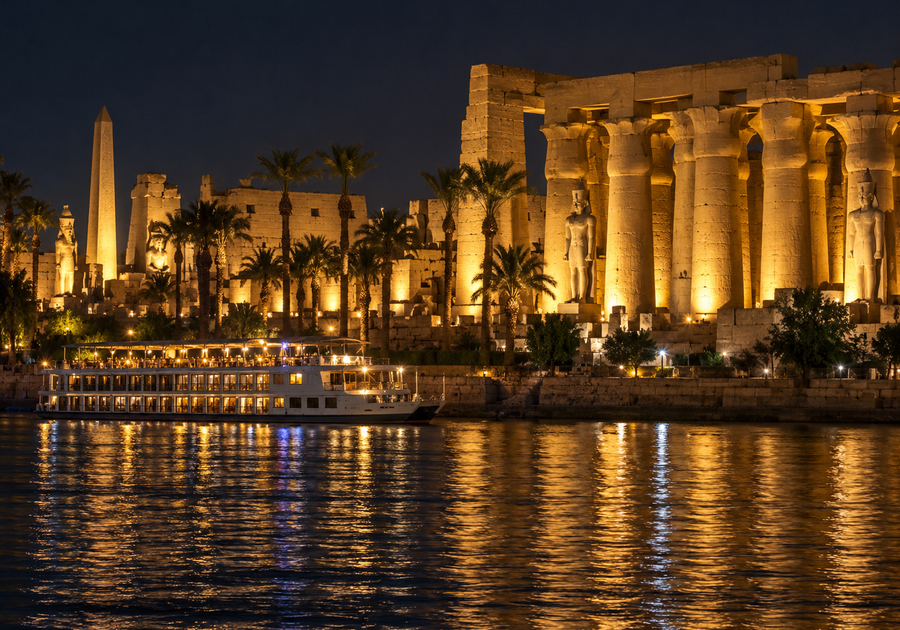
Built on the site of ancient Thebes, Luxor is the starting point for most Nile cruises and home to two of Egypt's greatest temple complexes: Karnak, the largest religious complex ever built, and Luxor Temple, illuminated dramatically after dark. Across the river, the Valley of the Kings holds the tombs of Tutankhamun and dozens of other pharaohs.
Esna, Egypt
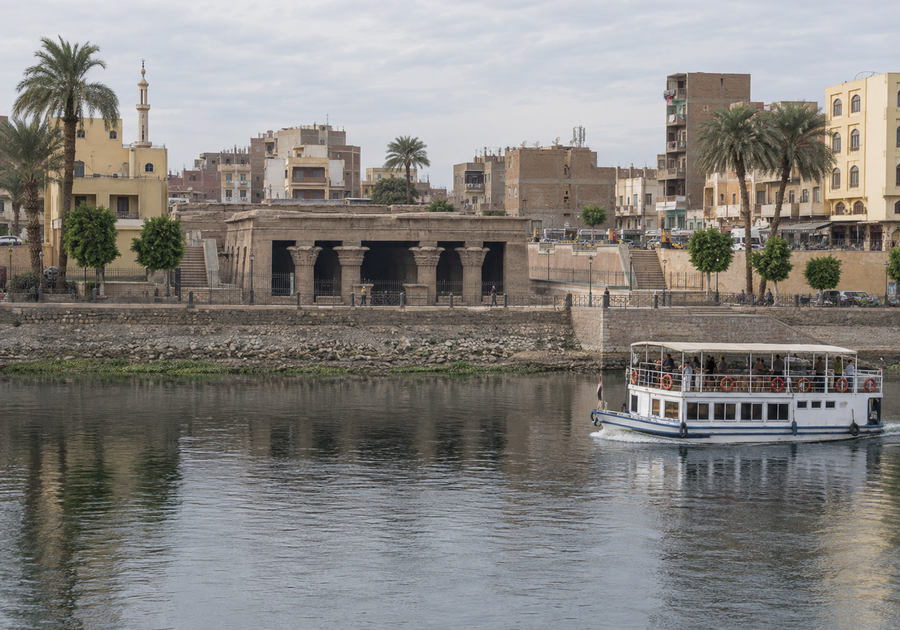
A quieter stop between Luxor and Edfu, Esna is home to the Temple of Khnum, notable for its elaborately decorated ceiling and columns, partially excavated from beneath the modern town that grew up around it.
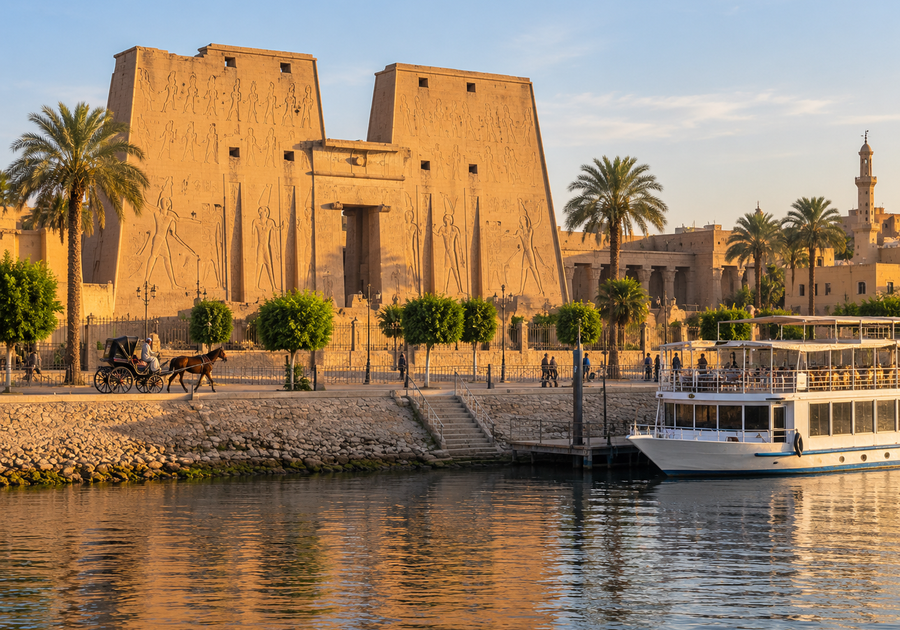
Edfu, Egypt
Edfu's Temple of Horus is one of the best-preserved temples in Egypt, largely buried in sand for centuries before excavation, which protected its carvings and hieroglyphics from weathering. Most cruisers reach it from the dock by horse-drawn carriage.
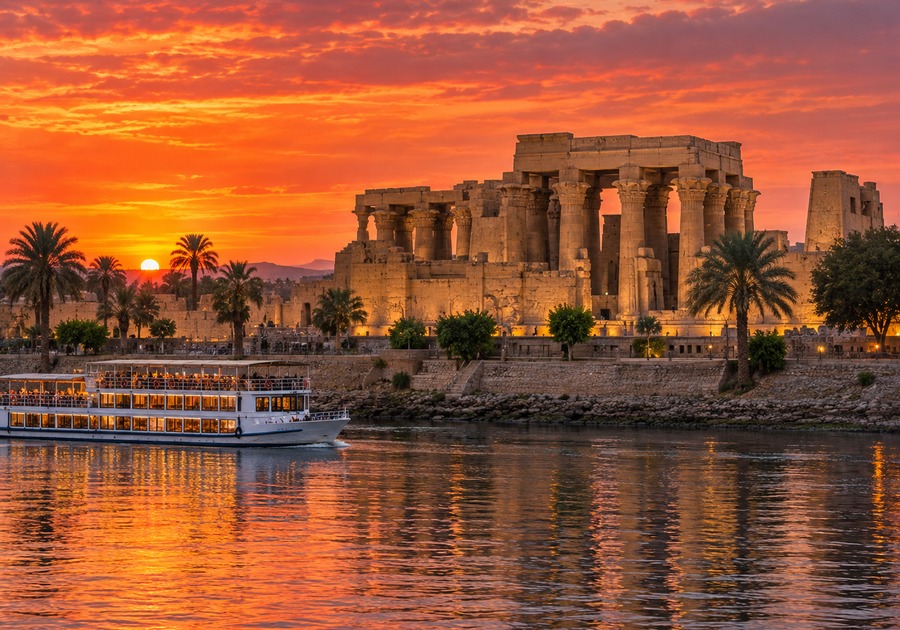
Kom Ombo, Egypt
The double temple at Kom Ombo, dedicated jointly to the crocodile god Sobek and the falcon god Horus, sits directly on the riverbank and is often visited at sunset, with a small museum of mummified crocodiles nearby.
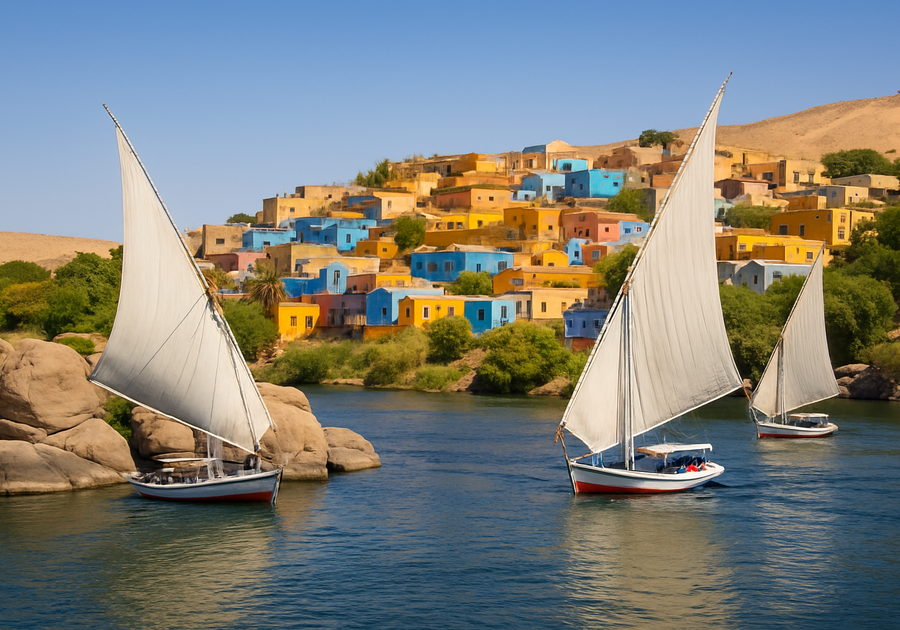
Aswan, Egypt
The southern end of most Nile cruises, Aswan is known for the Philae Temple, relocated stone by stone to Agilkia Island when the Aswan High Dam was built, as well as the Unfinished Obelisk and the colorful Nubian villages that many cruisers visit by felucca, Egypt's traditional sailboat.